SaiIndira Font Explained — How It Differs from Bamini
If you've spent any time around Tamil DTP work, you've probably come across two font names again and again — Bamini and SaiIndira. Both type Tamil. Both were built before Unicode Tamil became common. And at first glance, they can look like they do the exact same job.
They don't. SaiIndira and Bamini are built on completely different systems, and knowing the difference can save you real time and confusion — especially if you're mixing Tamil and English in the same document. Let's break it down in plain, simple words.
Table of Contents
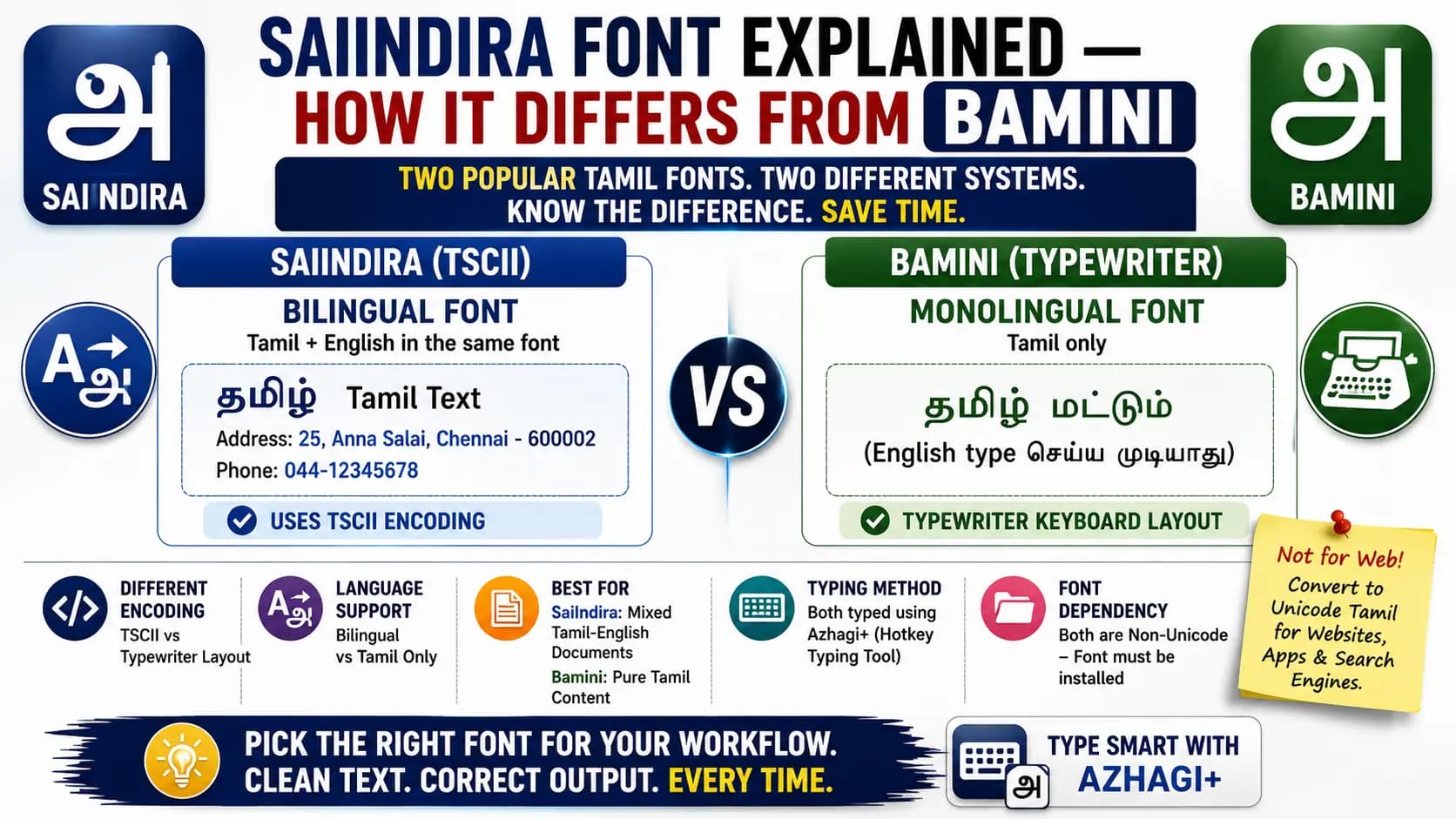
SaiIndira and Bamini are built on completely different foundations.
What Is SaiIndira
SaiIndira is a Tamil font built on TSCII encoding — a Tamil-specific character system that's different from the layout Bamini uses. But the one thing that really sets SaiIndira apart is this: it's a bilingual font. That means you can type both Tamil and English using the exact same font file, without switching fonts back and forth.
SaiIndira's bilingual design is its single biggest advantage over Bamini.
This might not sound like a big deal at first, but think about how often real documents mix languages — a Tamil paragraph with an English brand name, an address, or a phone number sitting right in the middle of it. With SaiIndira, that mix works smoothly, because the font itself understands both scripts.
What Is Bamini
Bamini, on the other hand, is a monolingual font — built only for Tamil. It follows the layout of the old Tamil typewriter keyboard, and every single key on it is dedicated to a Tamil letter or sound. There's no built-in way to type English using the Bamini font itself.
This isn't a flaw — it's simply what Bamini was designed for. It remains extremely common in Tamil DTP, print, and design work, especially in projects that are purely Tamil from start to finish.
SaiIndira vs Bamini — The Real Difference
While they might seem interchangeable, there are core differences between them that affect how you work. For a broader look at other legacy formats, you can also check out our comparison on Bamini vs TAB vs TAM Fonts.
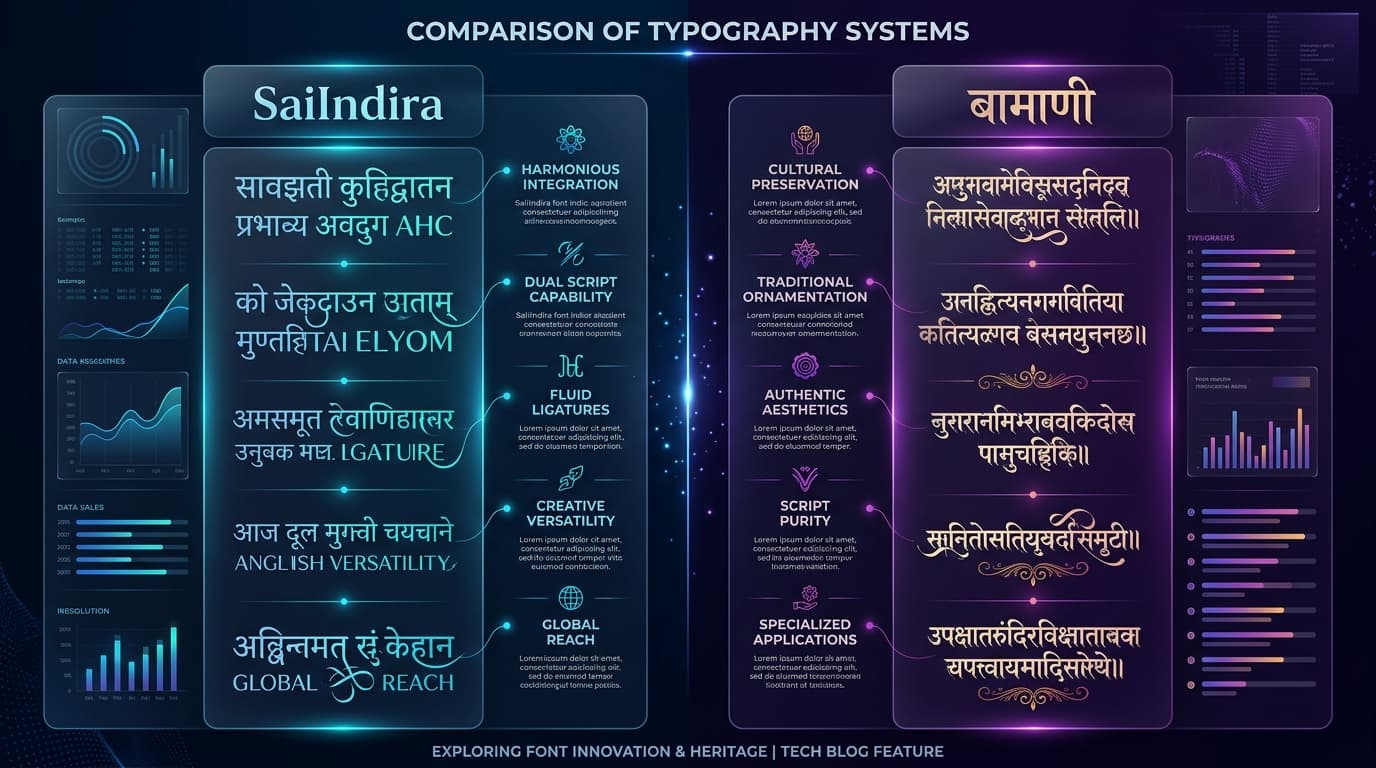
Both display Tamil, but SaiIndira can also mix in English letters from the same font — Bamini cannot.
- Encoding system: SaiIndira uses TSCII encoding. Bamini uses its own typewriter-based key mapping. They are not built the same way underneath.
- Language support: SaiIndira is bilingual — Tamil and English together, in one font. Bamini is monolingual — Tamil only.
- Best use case: SaiIndira works well for documents that regularly mix Tamil and English, like business letters, forms, or bilingual signage. Bamini is better suited for pure Tamil content, especially in traditional DTP and print workflows.
- Typing method: Both are usually typed using a typing tool like Azhagi+, where a hotkey switches your keyboard into the correct mode for that specific font.
- Font dependency: Both are non-Unicode fonts. This means the correct font file must be installed on your computer for either one to actually display as Tamil — without it, the text just looks like broken symbols or random letters.
Which One Should You Use
If your work involves a lot of Tamil-English mixing — think shop boards, forms, official letters, or anything where English words naturally sit next to Tamil ones — SaiIndira is genuinely more convenient, since you're not constantly switching fonts mid-sentence.
If your project is fully in Tamil, especially for traditional print, newspaper-style layouts, or existing DTP templates, Bamini remains the more common and widely supported choice. If you need to produce Bamini text from standard modern Tamil, use a reliable Unicode to Bamini Converter.
Key Takeaway
Either way, remember the one rule that applies to both: since neither is Unicode, this text won't display correctly on a website or in search engines. For anything going online, it should be converted to Unicode Tamil first.
Conclusion
SaiIndira and Bamini may both look like "just another old Tamil font" at first glance, but they solve different problems. SaiIndira's bilingual design makes it genuinely useful for mixed Tamil-English content, while Bamini remains the steady, dependable choice for pure Tamil DTP and print work. Knowing which one your project actually needs — instead of guessing — is what keeps your Tamil text clean and correctly formatted from the very first keystroke.
Frequently Asked Questions
Ready to convert? Our main tool handles Unicode ↔ Shree Lipi with the same accuracy and speed — instantly in your browser.
Try Unicode ↔ Shree Lipi Converter